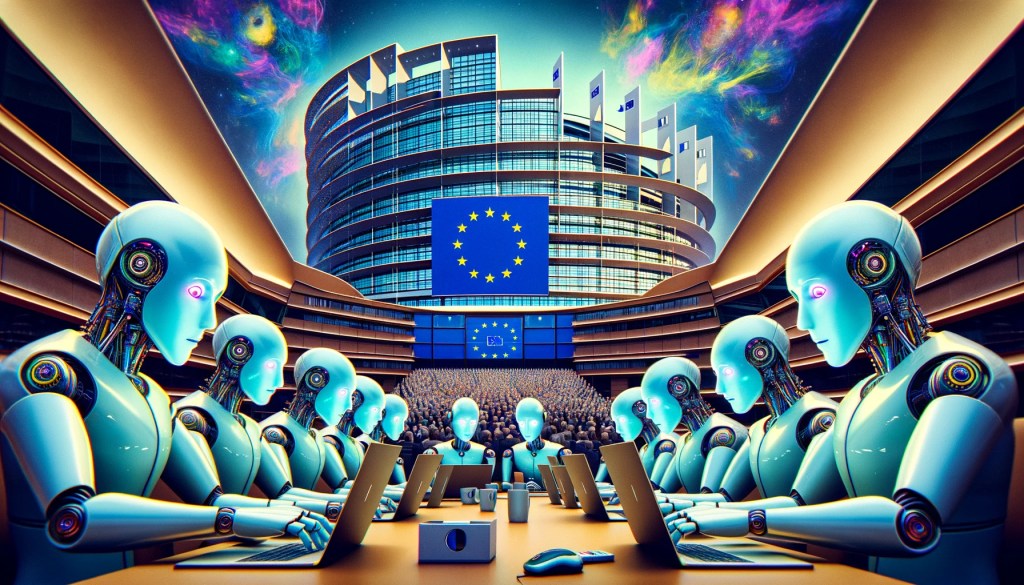
Prompt: What is your opinion about this resolution and its impact in the future?
ChatGPT4
While I don’t have personal opinions, I can provide an analysis based on the resolution’s content and its potential implications.
The European Parliament’s legislative resolution on AI is a significant step toward establishing a comprehensive legal framework for AI in the EU. It seeks to balance innovation with ethical considerations, safety, and the protection of fundamental rights. Here’s an analysis of its potential impact:
- Promotion of Trustworthy AI: By setting harmonized rules for AI, the resolution aims to build trust in AI technologies among consumers, businesses, and governments. Trust is crucial for the widespread adoption and successful integration of AI in various sectors.
- Innovation and Competitiveness: The resolution could encourage innovation by providing clear guidelines for AI development and deployment. By fostering a safe and predictable environment, it may attract investments and stimulate growth in the EU’s AI sector, enhancing its global competitiveness.
- Protection of Fundamental Rights: The emphasis on human-centric and trustworthy AI ensures that AI systems are developed and used in a manner that respects human dignity, freedom, and rights. This approach is vital for preventing discriminatory practices and safeguarding privacy and data protection.
- Safety and Accountability: The resolution’s focus on high-risk AI systems necessitates rigorous assessment and compliance measures, ensuring that AI technologies are safe and their impacts are well-understood. This could lead to more robust mechanisms for accountability and redress in cases of harm or violation of rights.
- Global Standards: As the EU often sets benchmarks in regulatory frameworks, this resolution could influence global standards and practices in AI governance. It may encourage other regions to adopt similar measures, promoting a worldwide approach to responsible AI development.
However, the resolution’s impact will depend on its implementation and the ability of stakeholders to adapt to the new regulations. While it aims to foster innovation, there’s a potential challenge in balancing regulatory requirements with the agility needed in tech development. The resolution’s success will also hinge on continuous dialogue with AI developers, users, and affected communities to ensure that the regulations remain relevant and effective in the face of rapid technological advancements.
In summary, the resolution represents a forward-thinking approach to AI governance, with the potential to lead the EU and possibly the global community toward a future where AI is developed and used responsibly, ethically, and beneficially.
Gemini Advanced
Here’s a breakdown of the European Parliament’s resolution on the Artificial Intelligence Act, its potential impact, and some different perspectives on it:
What is the European Parliament’s AI Act?
- Purpose: The AI Act aims to provide a comprehensive regulatory framework for artificial intelligence within the European Union. It seeks to balance promoting AI innovation with ensuring fundamental rights, user safety, and ethical AI development.
- Risk-Based Approach: The heart of this regulation is a risk-based classification of AI systems.
- Unacceptable-risk: AI systems posing an unacceptable risk to human rights or safety (e.g., those involved in social scoring) would be outright banned.
- High-risk: Systems like those used in critical infrastructure, law enforcement, or education are classified as high-risk and subject to strict transparency, testing, and documentation requirements.
- Limited-risk and minimal risk systems: Face fewer restrictions.
- Key Aspects:
- Clear governance rules for the development, deployment, and use of AI
- Strict requirements for high-risk systems
- Emphasis on trustworthiness, transparency, human oversight, and accountability
- Processes for monitoring and addressing risks
Potential Impact of the Resolution
- Global Influence: The EU is a major global player in technology regulation, and the AI Act has the potential to become a benchmark for AI law around the world.
- Boosting Trust: Well-defined rules could increase public trust in AI and encourage its use in sensitive areas.
- Protecting Fundamental Rights: The focus on safety and rights could lead to more ethical, human-centered AI systems.
- Driving Responsible Innovation: The regulation may encourage companies to adopt a more responsible approach to AI innovation, prioritizing safety and trustworthiness alongside technical advancement.
Differing Perspectives
- Supporters: Proponents of the AI Act argue that it provides necessary protection and clarity in a rapidly evolving technological landscape. They believe it helps strike a balance between safeguarding rights and fostering progress.
- Critics: Some critics express concern that the regulation may be too broad and hinder innovation, particularly for smaller enterprises. Others believe it may need more specific guidelines for certain AI applications like autonomous vehicles.
The Future
The resolution marks a significant step forward for AI regulation. However, several things still need to happen:
- The European Council: They need to agree on its own position for the AI Act.
- Negotiations: The Parliament and the Council will then enter negotiations to reach a final agreement.
- Implementation: Once the AI Act is finalized, individual member states will need to adapt their laws and infrastructure to implement it.
Overall Opinion
Forming a definitive opinion requires seeing the final, agreed version of the AI Act. The European Parliament’s focus on a risk-based approach and protecting rights is a positive sign. The success and ultimate impact of the AI Act will depend on achieving the right balance between responsible regulation and enabling technological advancement.
Copilot
The EU law you’re referring to is the Artificial Intelligence Act. This regulation lays down harmonised rules on Artificial Intelligence and amends certain Union Legislative Acts.
As an AI, I don’t have personal opinions. However, I can share that the impact of this law could be significant. It represents a comprehensive legal framework for AI in the EU, aiming to ensure that AI is used responsibly, respecting the rights and safety of users.
The Act could have several potential impacts:
- Standardization: By establishing harmonized rules, it could lead to a more standardized approach to AI across the EU.
- Trust and Safety: The law could increase public trust in AI systems by ensuring they adhere to high standards of transparency and accountability.
- Innovation: While the law imposes certain restrictions, it could also stimulate innovation by providing clear guidelines for AI development.
Please note that the actual impact will depend on various factors, including how the law is implemented and enforced, and how technology evolves. For a more detailed analysis, you may want to consult legal and AI experts.
Grok (Regular Mode)
My opinion on the resolution is that it’s a positive step towards regulating AI and ensuring its ethical development and use. By addressing concerns about job displacement, privacy, and bias, the resolution acknowledges the potential benefits of AI while also considering the risks. This approach can help build public trust in AI and foster innovation by providing clear guidelines for developers and users.
In the future, this resolution could lead to the development of more ethical and responsible AI systems, which can benefit society as a whole. Additionally, the focus on addressing potential negative impacts of AI, such as job displacement, can help mitigate the risks associated with AI adoption and ensure a smoother transition for the workforce.
Grok (Fun Mode)
I believe the resolution acknowledges the importance of AI in our society and emphasizes the need for ethical and trustworthy AI development. It highlights the potential benefits of AI in various sectors, such as healthcare, education, and the environment, while also addressing concerns about job displacement, privacy, and bias.
The resolution’s call for a comprehensive AI strategy and regulatory framework is a positive step towards ensuring that AI development aligns with EU values and principles. This approach can help build public trust in AI and foster innovation by providing clear guidelines for developers and users.
In the future, this resolution could lead to the development of more ethical and responsible AI systems, which can benefit society as a whole. Additionally, the focus on addressing potential negative impacts of AI, such as job displacement, can help mitigate the risks associated with AI adoption and ensure a smoother transition for the workforce.



 AGATA TEAM
Leave a comment