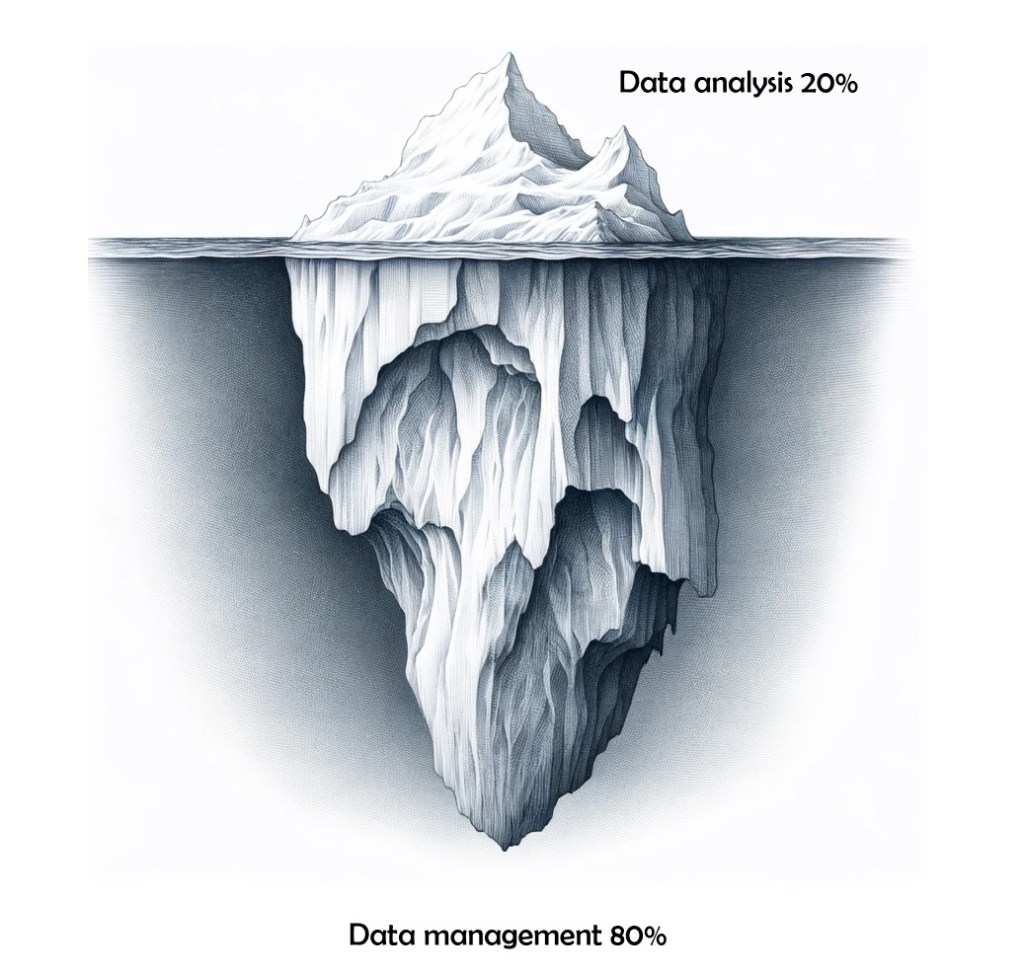
The alluring tip of the iceberg, glistening in the sun, is what often captures our attention. In science, this might be the elegant model, the groundbreaking discovery, or the publication in a prestigious journal. But beneath the surface lies a vast, unseen foundation: data management. Just like the iceberg’s hidden mass dwarfs its visible peak, data management quietly underpins every successful scientific endeavor.
While data analysis and model building are crucial for extracting meaning from our observations, they are only as good as the data they’re based on. Imagine constructing a magnificent sandcastle on a foundation of shaky, wet sand. Just as surely as the tide washes it away, poorly managed data can lead to unreliable results and wasted effort.
Why is data management so critical?
- Accuracy and Completeness: Imagine building a model to predict the spread of a disease based on incomplete or inaccurate medical records. The results could be misleading, potentially delaying effective interventions and endangering lives. Rigorous data management ensures the quality of your information, laying a solid foundation for trustworthy analysis.
- Reproducibility and Collaboration: Sharing data is essential for scientific progress, allowing others to verify your findings, build upon your work, and accelerate discovery. But if your data is disorganized or poorly documented, it becomes a frustrating labyrinth for collaborators. Effective data management makes your work transparent and accessible, fostering collaboration and scientific progress.
- Data Privacy and Regulations: The scientific landscape is increasingly governed by data privacy regulations. Failing to comply can lead to hefty fines and damage your institution’s reputation. Proactive data management ensures you understand and adhere to these regulations, protecting sensitive information and safeguarding your research.
Cultivating a Data-Savvy Mindset
Data management isn’t a one-time task; it’s an ongoing process woven into the fabric of your scientific program. Here are some key practices to cultivate a data-savvy mindset:
- Plan from the outset: Develop a data management plan before you start collecting data. This roadmap will guide your data collection, storage, organization, and analysis, ensuring consistency and efficiency.
- Embrace appropriate tools: Utilize specialized data management tools and platforms designed to streamline organization, cleaning, and analysis. These can significantly reduce manual effort and improve data quality.
- Document meticulously: Every piece of data has a story. Meticulous documentation – including data sources, collection methods, and transformations applied – ensures clarity and understanding for yourself and future researchers.
- Clean and validate regularly: Data is rarely perfect. Regularly cleaning and validating your data – identifying and correcting errors or inconsistencies – helps maintain its quality and prevent downstream issues.
- Backup and secure: Disasters happen. Regularly backing up your data to secure storage solutions safeguards against data loss and ensures its long-term accessibility.
By prioritizing data management, you’re not just being meticulous; you’re laying the groundwork for robust, reproducible research that can truly make a difference. Remember, the next groundbreaking discovery might hinge on the data buried beneath the surface, waiting to be unearthed by those who understand its true importance.




 AGATA TEAM
Leave a comment