
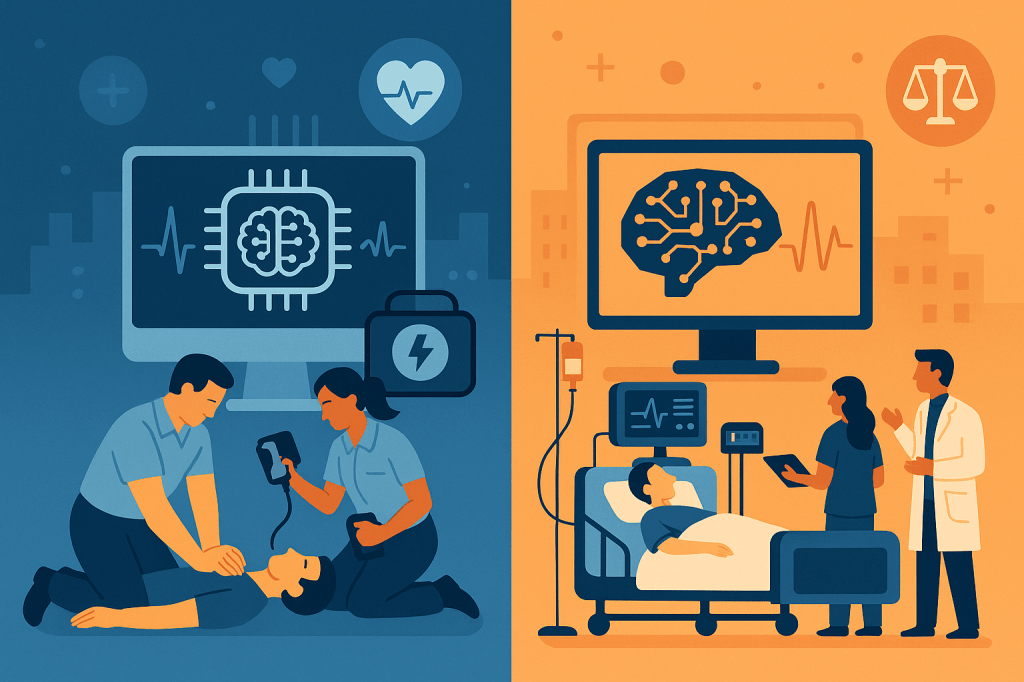
AGATA was initially established as an educational course with a visionary goal by Elena Bignami. The foundational idea behind AGATA was to impart knowledge about Artificial Intelligence (AI), exploring its use cases and applications specifically in the fields of anesthesia, intensive care, and pain management. The curriculum was designed to provide a comprehensive understanding of key AI concepts and terminology, including machine learning, deep learning, and neural networks.
The course aimed to equip participants with the insights needed to navigate the rapidly evolving AI landscape within healthcare settings. By delving into practical applications, AGATA sought to demonstrate how AI technologies can enhance patient care and outcomes in critical medical domains.
Furthermore, AGATA addressed crucial ethical considerations and potential biases inherent in AI deployment. Recognizing the significance of these issues, the course curriculum included discussions on the ethical use of AI, focusing on ensuring fairness, accountability, and transparency in AI algorithms and systems. This also encompassed a critical examination of how biases in AI could impact patient care and outcomes, urging the development of AI technologies that are both ethical and equitable.
In summary, AGATA’s foundation as a course was not merely educational but aimed at fostering a deep, nuanced understanding of AI’s potential and pitfalls in healthcare. By covering a broad spectrum of topics from AI applications in specific medical fields to the ethical challenges associated with its use, AGATA provided a holistic view of how AI can be leveraged to improve healthcare services, while also cautioning against its potential misuses and the importance of mitigating biases.



 AGATA TEAM